

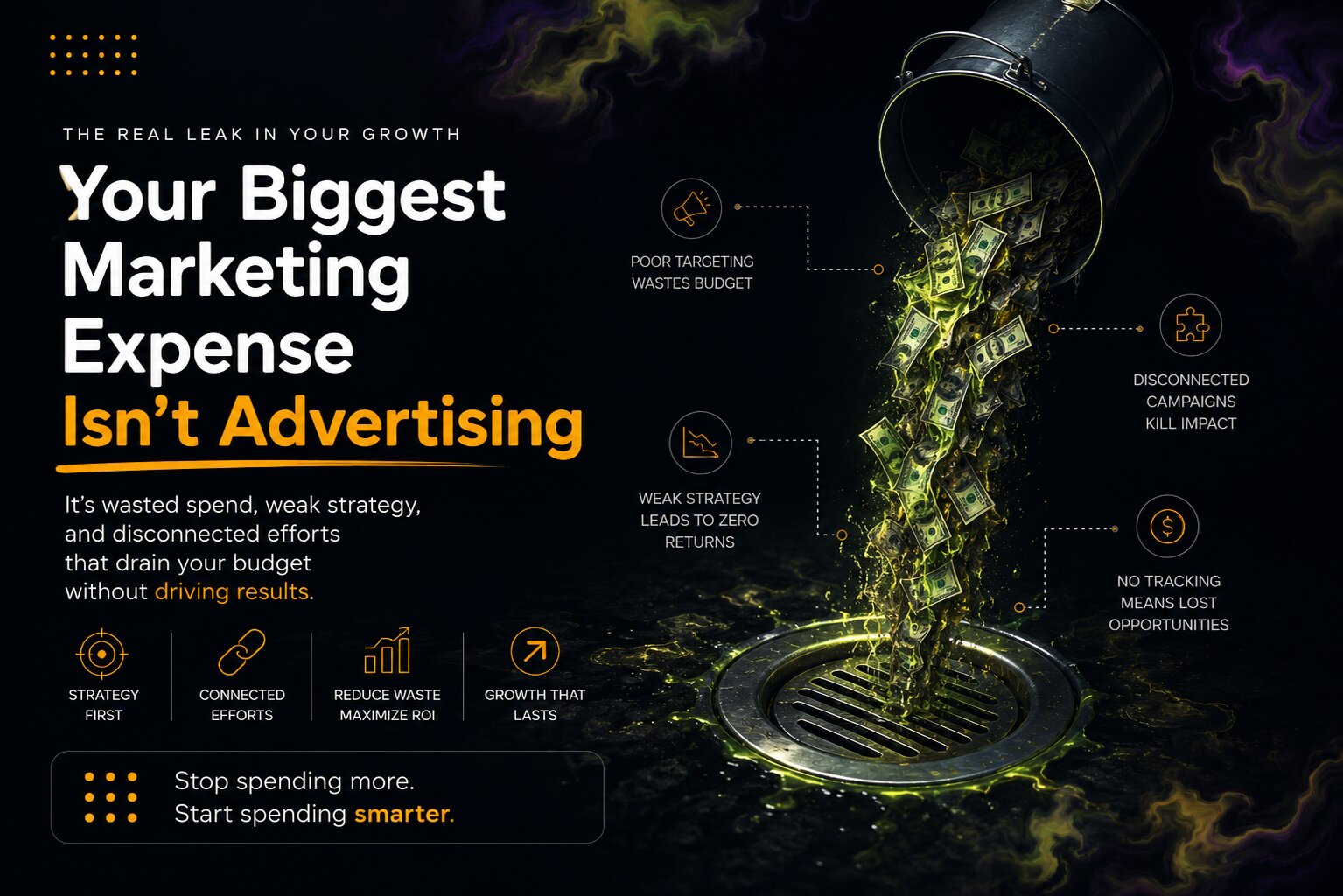
Most brands think their biggest marketing expense is advertising.
It is not.
The real expense is the money spent after the thinking has already failed.
A weak message sent to a large audience is expensive. A landing page that looks good but does not convert is expensive. A campaign that brings traffic without intent is expensive. Content that keeps the brand visible but forgettable is expensive.
The problem is not always how much a brand spends. The problem is how much of the marketing budget gets absorbed by weak positioning, unclear journeys, poor conversion logic and disconnected execution.
That is why marketing roi cannot be judged only through ad reports. Platforms can show clicks, leads, and cost per result. But the sharper question is this: did the full marketing system make the customer more likely to trust, understand and act?
If not, advertising did not fail alone. It exposed what was already broken.
It is not.
The real expense is the money spent after the thinking has already failed.
A weak message sent to a large audience is expensive. A landing page that looks good but does not convert is expensive. A campaign that brings traffic without intent is expensive. Content that keeps the brand visible but forgettable is expensive.
The problem is not always how much a brand spends. The problem is how much of the marketing budget gets absorbed by weak positioning, unclear journeys, poor conversion logic and disconnected execution.
That is why marketing roi cannot be judged only through ad reports. Platforms can show clicks, leads, and cost per result. But the sharper question is this: did the full marketing system make the customer more likely to trust, understand and act?
If not, advertising did not fail alone. It exposed what was already broken.
Spending More Does Not Fix Waste
Many brands respond to poor performance by increasing spend: more ads, more campaigns, more content, more retargeting, more channels.
But more spend does not repair weak thinking. If the message is unclear, spend distributes confusion faster. If the website lack’s structure, traffic creates more exits. If the landing page does not handle objections, clicks become wasted opportunity.
This is where return on marketing investment needs a broader lens. A brand can reduce cost per lead and still attract weak leads. It can increase traffic and still fail to convert.
Performance is not just a media problem. It is a system problem.
But more spend does not repair weak thinking. If the message is unclear, spend distributes confusion faster. If the website lack’s structure, traffic creates more exits. If the landing page does not handle objections, clicks become wasted opportunity.
This is where return on marketing investment needs a broader lens. A brand can reduce cost per lead and still attract weak leads. It can increase traffic and still fail to convert.
Performance is not just a media problem. It is a system problem.
The Hidden Reality
The hidden reality is this: your biggest marketing expense is often not what you pay platforms. It is what your inefficient marketing system loses.
That loss rarely appears in one dashboard.
It shows up in visitors who leave too soon, leads that never respond, customers who compare but do not enquire, and media spend that brings people to pages that cannot carry the sales conversation.
This is where digital marketing roi becomes more serious than surface reporting.
Clicks are not growth. Leads are not always opportunity. Visibility is not always demand. Traffic without clarity creates impressive dashboards, not business outcomes.
That loss rarely appears in one dashboard.
It shows up in visitors who leave too soon, leads that never respond, customers who compare but do not enquire, and media spend that brings people to pages that cannot carry the sales conversation.
This is where digital marketing roi becomes more serious than surface reporting.
Clicks are not growth. Leads are not always opportunity. Visibility is not always demand. Traffic without clarity creates impressive dashboards, not business outcomes.
The Marketing Waste Map
At Anvis Digital, we look at wasted spend through the Marketing Waste Map: five places where brands quietly lose money before advertising can prove its value.
First, message leak. The customer sees the brand but misses why it matters.
Second, media leak. The campaign reaches people, but not at the right stage of intent, trust or readiness.
Third, website leak. The visitor arrives, but the page does not guide attention, answer hesitation or build confidence.
Fourth, conversion leak. The customer is interested, but the form, CTA, WhatsApp flow or follow-up makes action harder.
Fifth, measurement leak. The report shows numbers, but not what changes next.
This is why marketing efficiency is not about spending less blindly. It is about making every rupee work harder across the full journey.
First, message leak. The customer sees the brand but misses why it matters.
Second, media leak. The campaign reaches people, but not at the right stage of intent, trust or readiness.
Third, website leak. The visitor arrives, but the page does not guide attention, answer hesitation or build confidence.
Fourth, conversion leak. The customer is interested, but the form, CTA, WhatsApp flow or follow-up makes action harder.
Fifth, measurement leak. The report shows numbers, but not what changes next.
This is why marketing efficiency is not about spending less blindly. It is about making every rupee work harder across the full journey.
Performance Marketing Cannot Carry Everything
Performance marketing is powerful when the system around it is built properly.
It can capture demand, test messages, bring qualified audiences, support remarketing and generate measurable action. But performance marketing cannot rescue unclear positioning, weak landing pages, vague offers, slow websites or poor follow-up.
Many brands blame targeting, platform cost, or creative fatigue. Sometimes they are right. Often, the campaign is doing its job. It is bringing attention to a journey that cannot convert attention into confidence.
Media spend is not the problem.
Media spend reveals the problem.
A serious growth partner studies the full path: audience intent, message clarity, landing page logic, website experience, lead quality, analytics and conversion behaviour.
That is how waste is found. That is how growth improves.
It can capture demand, test messages, bring qualified audiences, support remarketing and generate measurable action. But performance marketing cannot rescue unclear positioning, weak landing pages, vague offers, slow websites or poor follow-up.
Many brands blame targeting, platform cost, or creative fatigue. Sometimes they are right. Often, the campaign is doing its job. It is bringing attention to a journey that cannot convert attention into confidence.
Media spend is not the problem.
Media spend reveals the problem.
A serious growth partner studies the full path: audience intent, message clarity, landing page logic, website experience, lead quality, analytics and conversion behaviour.
That is how waste is found. That is how growth improves.
Your Real Cost Is the Opportunity You Never See
Advertising is visible on the invoice. Lost opportunity is not.
The most dangerous marketing waste is the customer who almost enquired but left. The buyer who liked your ad but did not trust the landing page. The lead who filled the form but lost interest after a slow response. The prospect who compared you with a competitor and found them easier to understand.
Before increasing spend, brands need harder questions.
Is the message clear enough? Is the landing page reducing doubt? Is the media plan aligned with intent? Is reporting improving decisions or only recording activity?
Your biggest marketing expense is not advertising.
It is the growth your system quietly fails to convert.
The most dangerous marketing waste is the customer who almost enquired but left. The buyer who liked your ad but did not trust the landing page. The lead who filled the form but lost interest after a slow response. The prospect who compared you with a competitor and found them easier to understand.
Before increasing spend, brands need harder questions.
Is the message clear enough? Is the landing page reducing doubt? Is the media plan aligned with intent? Is reporting improving decisions or only recording activity?
Your biggest marketing expense is not advertising.
It is the growth your system quietly fails to convert.
FAQs
1. Why is advertising not always the biggest marketing expense?
Advertising is visible, but the bigger cost is often wasted opportunity. Weak messaging, unclear websites, poor landing pages, disconnected campaigns and slow follow-up can reduce conversions even when ad spend is high.
2. How can brands improve marketing roi?
Brands can improve marketing roi by connecting strategy, messaging, SEO, paid media, content, website experience, landing pages, analytics and conversion optimisation instead of treating each activity separately.
3. Why does performance marketing fail sometimes?
Performance marketing fails when the system around it is weak. Even good targeting and creative cannot fix unclear positioning, poor landing pages, vague offers, slow websites or weak follow-up.
4. How does Anvis Digital help improve marketing efficiency?
Anvis Digital helps brands find where spend is leaking, then connects strategy, content, SEO, paid media, websites, landing pages, analytics and conversion optimisation into one growth system focused on clearer business outcomes.