

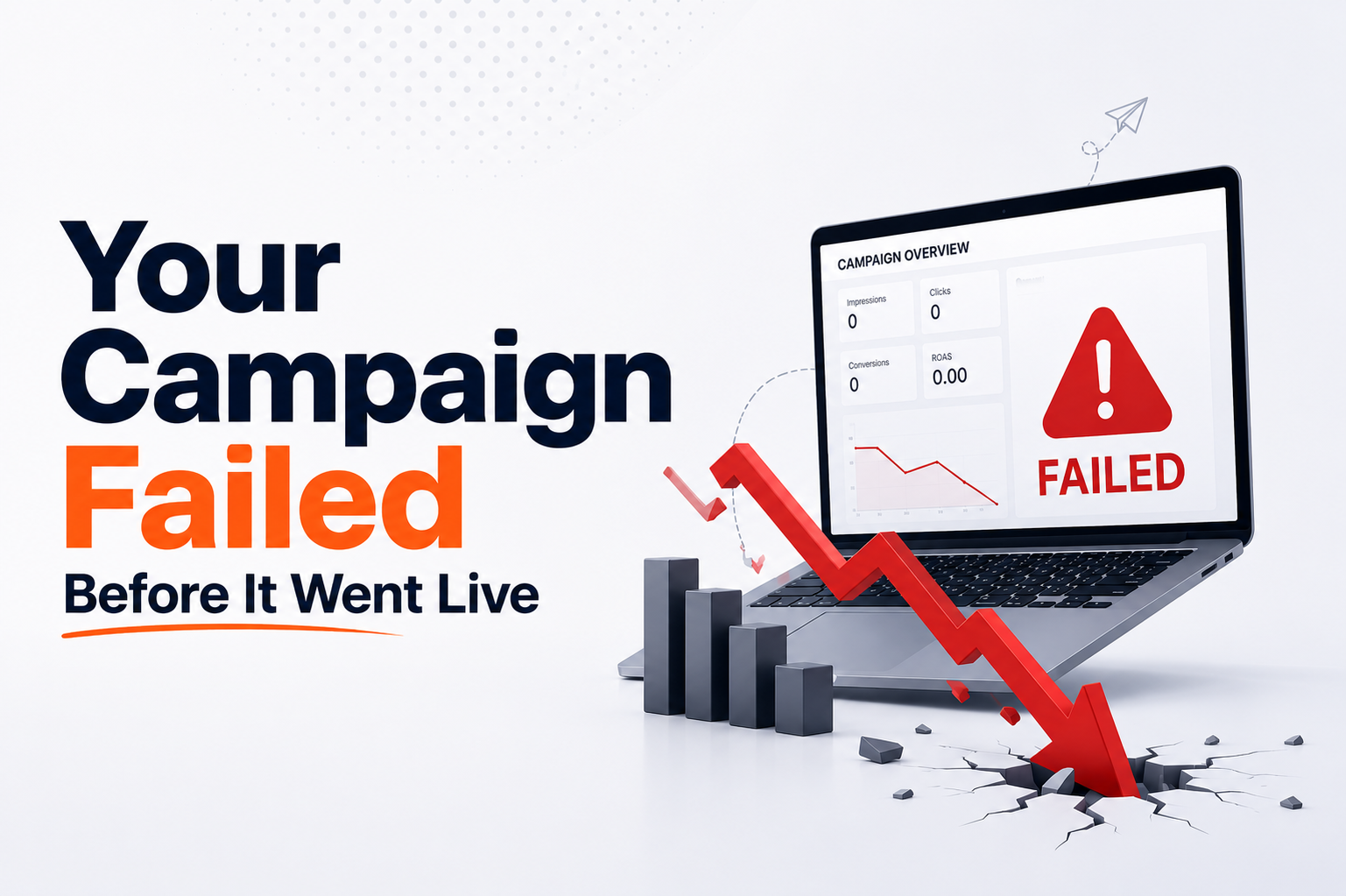
When a campaign underperforms, the excuses arrive quickly.
The media budget was too small. The algorithm changed. The audience did not respond. The creative needed more time. The landing page brought low-quality traffic.
Sometimes these explanations are valid. But many campaigns do not fail while they are running. They fail much earlier, during planning, when weak assumptions are mistaken for strategy.
By the time the ads go live, the damage is already stitched into the campaign.
A strong campaign planning strategy is not paperwork before the real work begins. It is the foundation that decides whether creative, media, content, website and measurement systems will move together or collide publicly.
The media budget was too small. The algorithm changed. The audience did not respond. The creative needed more time. The landing page brought low-quality traffic.
Sometimes these explanations are valid. But many campaigns do not fail while they are running. They fail much earlier, during planning, when weak assumptions are mistaken for strategy.
By the time the ads go live, the damage is already stitched into the campaign.
A strong campaign planning strategy is not paperwork before the real work begins. It is the foundation that decides whether creative, media, content, website and measurement systems will move together or collide publicly.
The Objective Was Too Vague
“Build awareness” is not a complete objective.
Neither is “generate engagement,” “create buzz” or “increase visibility.” These phrases sound professional, but they rarely help teams make decisions.
What kind of awareness is required? Among whom? What should people remember? What action should follow?
Without clear answers, every department interprets the campaign differently. The creative team focuses on attention. The media team optimises for reach. The content team explains features. The sales team expects enquiries.
Everyone delivers their part, but the campaign never becomes one connected system.
An effective advertising campaign strategy begins with a defined change. It identifies what the audience thinks now, what the brand wants them to think next and what action should become easier as a result.
Neither is “generate engagement,” “create buzz” or “increase visibility.” These phrases sound professional, but they rarely help teams make decisions.
What kind of awareness is required? Among whom? What should people remember? What action should follow?
Without clear answers, every department interprets the campaign differently. The creative team focuses on attention. The media team optimises for reach. The content team explains features. The sales team expects enquiries.
Everyone delivers their part, but the campaign never becomes one connected system.
An effective advertising campaign strategy begins with a defined change. It identifies what the audience thinks now, what the brand wants them to think next and what action should become easier as a result.
The Audience Was Reduced to Demographics
Age, location, income, and job title can help define an audience. They cannot explain what makes that audience care.
Campaigns weaken when they target customer categories without understanding customer situations. People may be overwhelmed by choice, suspicious of exaggerated claims, delaying a decision or unsure why one option costs more than another.
Those insights create campaigns. Demographic spreadsheets merely create targeting filters.
Before designing the first asset, brands must understand the tension behind the customer’s decision. Otherwise, the campaign speaks to a profile while missing the person.
Campaigns weaken when they target customer categories without understanding customer situations. People may be overwhelmed by choice, suspicious of exaggerated claims, delaying a decision or unsure why one option costs more than another.
Those insights create campaigns. Demographic spreadsheets merely create targeting filters.
Before designing the first asset, brands must understand the tension behind the customer’s decision. Otherwise, the campaign speaks to a profile while missing the person.
The Message Fell Apart Across Channels
A campaign may begin with an exciting concept and lose its shape once execution starts.
Social media adapts it one way. Search ads reduce it to a functional claim. Influencers interpret it differently. The website introduces another message. The landing page focuses only on the offer.
Soon, what should have been one integrated marketing campaign becomes a collection of unrelated activities.
Channel adaptation is necessary, but every touchpoint must reinforce the same central belief.
The execution can change. The meaning cannot.
When a campaign lacks a clear strategic spine, more channels create fragmentation instead of reach. More activity simply gives the audience more versions of the brand to misunderstand.
Social media adapts it one way. Search ads reduce it to a functional claim. Influencers interpret it differently. The website introduces another message. The landing page focuses only on the offer.
Soon, what should have been one integrated marketing campaign becomes a collection of unrelated activities.
Channel adaptation is necessary, but every touchpoint must reinforce the same central belief.
The execution can change. The meaning cannot.
When a campaign lacks a clear strategic spine, more channels create fragmentation instead of reach. More activity simply gives the audience more versions of the brand to misunderstand.
Media Entered Too Late
Media planning often begins after the creative has already been approved. The team then decides where to place it, how much to spend, and which audiences to target.
That sequence limits the campaign before launch.
Strong media planning services should influence campaign architecture from the beginning. Different platforms carry different behaviours, attention patterns, creative requirements and roles within the customer journey.
Search may capture active intent. Remarketing may answer hesitation. The website may build confidence and convert interest.
Media is not the delivery van waiting outside the creative department. It helps decide how the campaign should travel.
That sequence limits the campaign before launch.
Strong media planning services should influence campaign architecture from the beginning. Different platforms carry different behaviours, attention patterns, creative requirements and roles within the customer journey.
Search may capture active intent. Remarketing may answer hesitation. The website may build confidence and convert interest.
Media is not the delivery van waiting outside the creative department. It helps decide how the campaign should travel.
Launch Day Is the Final Exam
Launch day does not create campaign quality. It reveals it.
It reveals whether the brief was clear, the audience insight was real, the message was strong enough, the channels had defined roles, the website supported the promise and the measurement system knew what success meant.
Campaigns also fail when teams track whatever the dashboard provides without asking whether those numbers reflect the original objective.
A trust-building campaign should not be judged only by immediate leads. A lead-generation campaign should not hide behind reach. Measurement must connect to purpose, or reporting becomes a colourful autopsy that explains activity without revealing impact.
At Anvis Digital, campaign planning is treated as orchestration, not administration. Strategy, storytelling, creative direction, media intelligence, website experience and performance measurement are connected before execution begins.
The goal is not merely to launch more assets. It is to build a connected growth system in which every message, channel and interaction performs a deliberate role.
It reveals whether the brief was clear, the audience insight was real, the message was strong enough, the channels had defined roles, the website supported the promise and the measurement system knew what success meant.
Campaigns also fail when teams track whatever the dashboard provides without asking whether those numbers reflect the original objective.
A trust-building campaign should not be judged only by immediate leads. A lead-generation campaign should not hide behind reach. Measurement must connect to purpose, or reporting becomes a colourful autopsy that explains activity without revealing impact.
At Anvis Digital, campaign planning is treated as orchestration, not administration. Strategy, storytelling, creative direction, media intelligence, website experience and performance measurement are connected before execution begins.
The goal is not merely to launch more assets. It is to build a connected growth system in which every message, channel and interaction performs a deliberate role.
Conclusion
Campaigns rarely collapse because of one catastrophic mistake. They weaken through small planning gaps that multiply across creative, media, content and conversion journeys.
The solution is not to work faster after launch. It is to think more clearly before it.
Define the change. Understand the human tension. Build one central message. Give every channel a role. Decide how success will be measured.
Because when a campaign is strategically broken before launch, no amount of optimisation can completely rescue it.
The solution is not to work faster after launch. It is to think more clearly before it.
Define the change. Understand the human tension. Build one central message. Give every channel a role. Decide how success will be measured.
Because when a campaign is strategically broken before launch, no amount of optimisation can completely rescue it.