

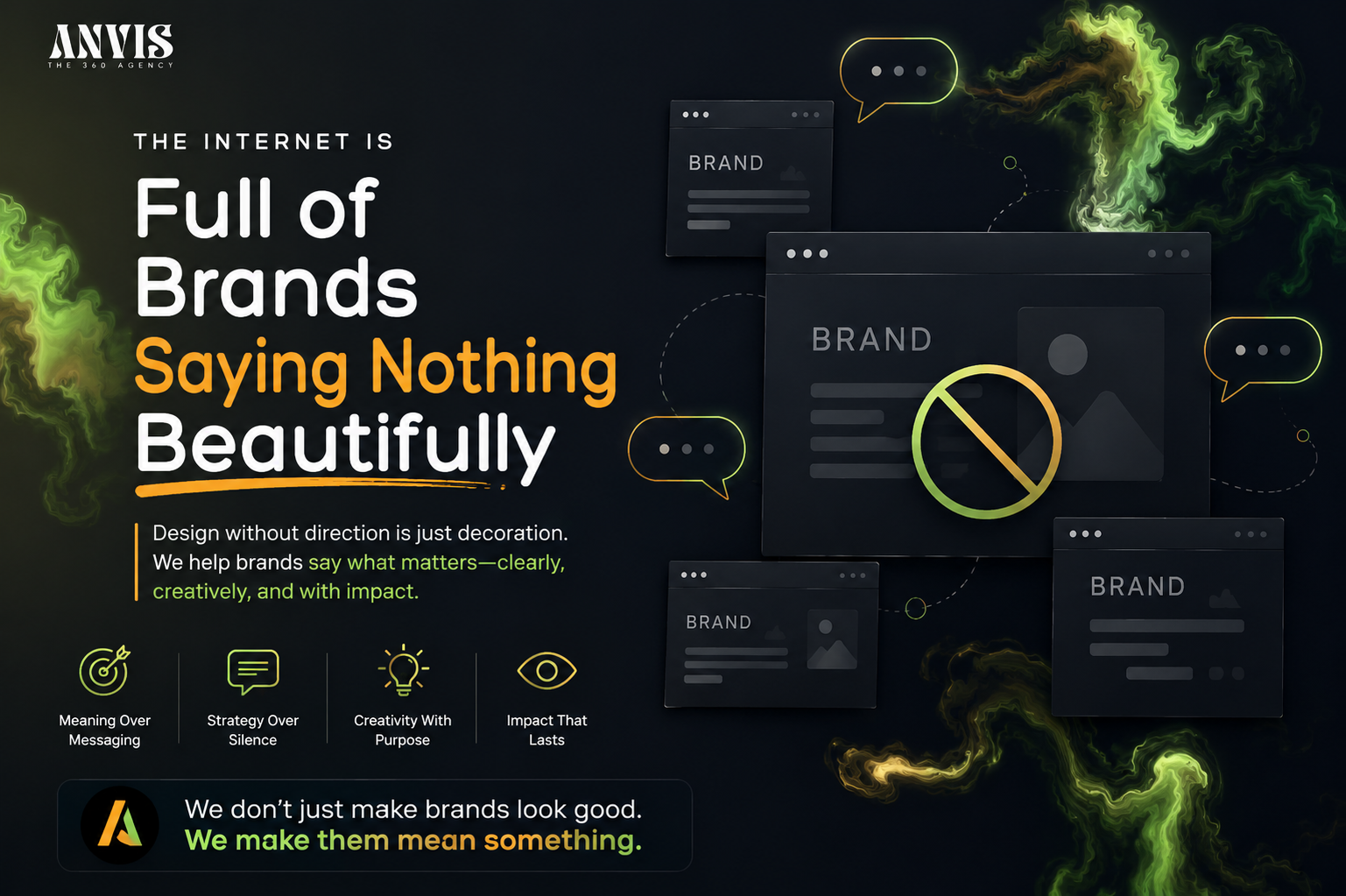
The internet has never looked better.
Brands have cleaner grids, sharper videos, aesthetic colour palettes, polished reels, minimal websites, cinematic product shots and campaign visuals that look expensive at first glance.
And yet, so much of it says absolutely nothing.
That is the strange problem with modern digital marketing. Many brands now look professional before they sound meaningful. They have learnt how to appear premium, current, and well-designed, but not how to become memorable, useful or believable.
A brand may look good on Instagram, have a stylish website, run sleek ads and still leave the audience with one unanswered question:
Why should I care?
Brands have cleaner grids, sharper videos, aesthetic colour palettes, polished reels, minimal websites, cinematic product shots and campaign visuals that look expensive at first glance.
And yet, so much of it says absolutely nothing.
That is the strange problem with modern digital marketing. Many brands now look professional before they sound meaningful. They have learnt how to appear premium, current, and well-designed, but not how to become memorable, useful or believable.
A brand may look good on Instagram, have a stylish website, run sleek ads and still leave the audience with one unanswered question:
Why should I care?
Beautiful Design Cannot Replace a Clear Point of View
Design matters. Strong visuals create first impressions, signal quality and help a brand feel more credible. But design is not strategy.
A well-designed post can still be vague.
A polished website can still be confusing.
A cinematic video can still lack a message.
A premium-looking campaign can still fail to move anyone.
This happens when brands treat visual identity as the whole story instead of the container for the story.
A brand does not become stronger just because its communication looks refined. It becomes stronger when people understand what it stands for, what problem it solves, why it is different and why it deserves attention.
The danger is that beautiful content can hide weak thinking. It can make a brand feel active, modern and present while quietly failing to build recall.
That is where brands start mistaking appearance for impact.
A well-designed post can still be vague.
A polished website can still be confusing.
A cinematic video can still lack a message.
A premium-looking campaign can still fail to move anyone.
This happens when brands treat visual identity as the whole story instead of the container for the story.
A brand does not become stronger just because its communication looks refined. It becomes stronger when people understand what it stands for, what problem it solves, why it is different and why it deserves attention.
The danger is that beautiful content can hide weak thinking. It can make a brand feel active, modern and present while quietly failing to build recall.
That is where brands start mistaking appearance for impact.
The Rise of Polished Sameness
Across industries, many brands are beginning to sound and look strangely similar.
Everyone is “redefining experiences.”
Everyone is “building solutions.”
Everyone is “driven by innovation.”
Everyone is “your trusted partner.”
The visuals may change, but the meaning often stays generic.
This creates a market where brands appear different on the surface but feel identical underneath. A school, real estate brand, healthcare company, luxury product and digital service provider may all end up using the same vague language of excellence, trust, innovation and transformation.
When every brand says the same thing beautifully, beauty loses power.
People do not remember the most polished brand. They remember the clearest one. They remember the brand that helped them understand something, feel something, solve something or choose something with more confidence.
Everyone is “redefining experiences.”
Everyone is “building solutions.”
Everyone is “driven by innovation.”
Everyone is “your trusted partner.”
The visuals may change, but the meaning often stays generic.
This creates a market where brands appear different on the surface but feel identical underneath. A school, real estate brand, healthcare company, luxury product and digital service provider may all end up using the same vague language of excellence, trust, innovation and transformation.
When every brand says the same thing beautifully, beauty loses power.
People do not remember the most polished brand. They remember the clearest one. They remember the brand that helped them understand something, feel something, solve something or choose something with more confidence.
Content Needs Meaning Before Format
Many brands begin content planning by asking, “What format should we create?”
Should it be a reel?
Should it be a carousel?
Should it be a blog?
Should it be a video?
Should it be an ad?
These are useful execution questions, but they are not the starting point.
The better question is:
What should this make the audience understand or remember?
A reel without a sharp idea is just movement.
A carousel without insight is just slides.
A blog without perspective is just searchable filler.
An ad without clarity is just paid interruption.
This is why connected digital growth begins before design, posting or media buying. It begins with strategy. The brand must know its audience, message, proof, tone and role in the customer journey.
Once that is clear, formats become powerful. Without it, formats become decoration.
Should it be a reel?
Should it be a carousel?
Should it be a blog?
Should it be a video?
Should it be an ad?
These are useful execution questions, but they are not the starting point.
The better question is:
What should this make the audience understand or remember?
A reel without a sharp idea is just movement.
A carousel without insight is just slides.
A blog without perspective is just searchable filler.
An ad without clarity is just paid interruption.
This is why connected digital growth begins before design, posting or media buying. It begins with strategy. The brand must know its audience, message, proof, tone and role in the customer journey.
Once that is clear, formats become powerful. Without it, formats become decoration.
What Meaningful Digital Communication Looks Like?
Meaningful communication does not mean heavy, complicated or overly serious content. It means every touchpoint has a job.
The website should clarify the brand, guide users and support enquiries.
Social media should build memory, not just display creatives.
Paid campaigns should create interest with one clear message.
Landing pages should reduce hesitation and move users toward action.
Blogs should answer real customer questions, not just target keywords.
Media planning should place the right message in the right context.
For Anvis Digital, this is where strategy, storytelling, content, website experience, paid media, social media and digital infrastructure need to work together as a connected growth system. The goal is not to make brands louder or simply better-looking. The goal is to make every digital interaction clearer, sharper and more connected to business outcomes.
Because a brand’s visual identity may attract attention, but its meaning decides whether that attention stays.
The website should clarify the brand, guide users and support enquiries.
Social media should build memory, not just display creatives.
Paid campaigns should create interest with one clear message.
Landing pages should reduce hesitation and move users toward action.
Blogs should answer real customer questions, not just target keywords.
Media planning should place the right message in the right context.
For Anvis Digital, this is where strategy, storytelling, content, website experience, paid media, social media and digital infrastructure need to work together as a connected growth system. The goal is not to make brands louder or simply better-looking. The goal is to make every digital interaction clearer, sharper and more connected to business outcomes.
Because a brand’s visual identity may attract attention, but its meaning decides whether that attention stays.
Conclusion
The internet is full of brands saying nothing beautifully because looking good has become easier than thinking clearly.
But the brands that grow are not the ones that only polish the surface. They build meaning into every touchpoint. They know what their audience needs to understand. They know how their website, content, ads, campaigns and media should work together.
Beauty may win the first glance.
Meaning wins memory.
And in digital marketing, memory is where growth begins.
But the brands that grow are not the ones that only polish the surface. They build meaning into every touchpoint. They know what their audience needs to understand. They know how their website, content, ads, campaigns and media should work together.
Beauty may win the first glance.
Meaning wins memory.
And in digital marketing, memory is where growth begins.